Table of Contents
- Introduction: Unveiling the Psychology of Successful Stock Trading
- Emotional Control: The Key to Consistent Trading
- Understanding Market Psychology: Reading the Collective Mind
- Overcoming Psychological Traps: Navigating Cognitive Biases
- Building a Winning Trader’s Mindset: Developing Mental Resilience
- The Role of Psychology in Algorithmic Trading: The Human Element in AI
Introduction: Unveiling the Psychology of Successful Stock Trading
The world of stock trading is as much a realm of psychology as it is of finance. It’s not just about numbers and statistics, but also about the mental and emotional aspects that drive trading decisions. Three crucial aspects make understanding the psychology behind successful stock trading significant: it helps investors make more informed decisions, it equips them to handle the pressures of the market better, and it enables them to recognize and overcome the psychological traps that can lead to disastrous trading decisions.
• Mastering your emotions is indispensable for successful trading. It prevents irrational decision-making driven by fear or greed.
• Understanding market psychology allows traders to anticipate market trends better, giving them an edge over those who solely rely on technical analysis.
Emotional Control: The Key to Consistent Trading
Emotional regulation is paramount in stock trading. The markets are notoriously volatile and unpredictability can trigger a roller-coaster of emotions. Fear and greed are two emotions that often cloud judgment, leading to impulsive decisions. Successful traders have mastered the art of emotional control, making decisions based on logic, data, and sound strategy, rather than allowing emotions to dictate their actions. They know that emotions can distort reality, leading to poor trading decisions and potential losses.
Understanding Market Psychology: Reading the Collective Mind
Market psychology refers to the overall sentiment or feeling that the majority of investors have about the market. It is a powerful force that can drive market trends. Successful traders can gauge market psychology by analyzing patterns and trends, giving them insights into potential market moves. They understand that the market is driven by the collective emotions of its participants, and by understanding these emotions, they can anticipate market movements and trade accordingly.
Overcoming Psychological Traps: Navigating Cognitive Biases
Even the most seasoned traders can fall prey to psychological traps, often stemming from cognitive biases. These include overconfidence, where traders believe they know more than they do; confirmation bias, where they focus only on information that supports their beliefs; and loss aversion, where they hold onto losing stocks in the hope that they will rebound. Successful traders are aware of these traps and take active steps to avoid them, ensuring they make rational and informed decisions.
Building a Winning Trader’s Mindset: Developing Mental Resilience
A winning trader’s mindset is built on mental resilience, discipline, and a constant desire to learn. Successful traders do not let setbacks deter them; instead, they view them as opportunities to learn and improve. They stick to their strategy even in the face of losses, knowing that consistency is paramount in trading. They are also lifelong learners, continuously seeking knowledge and refining their skills. This winning mindset, coupled with emotional control and understanding of market psychology, is what sets successful traders apart.
The Role of Psychology in Algorithmic Trading: The Human Element in AI
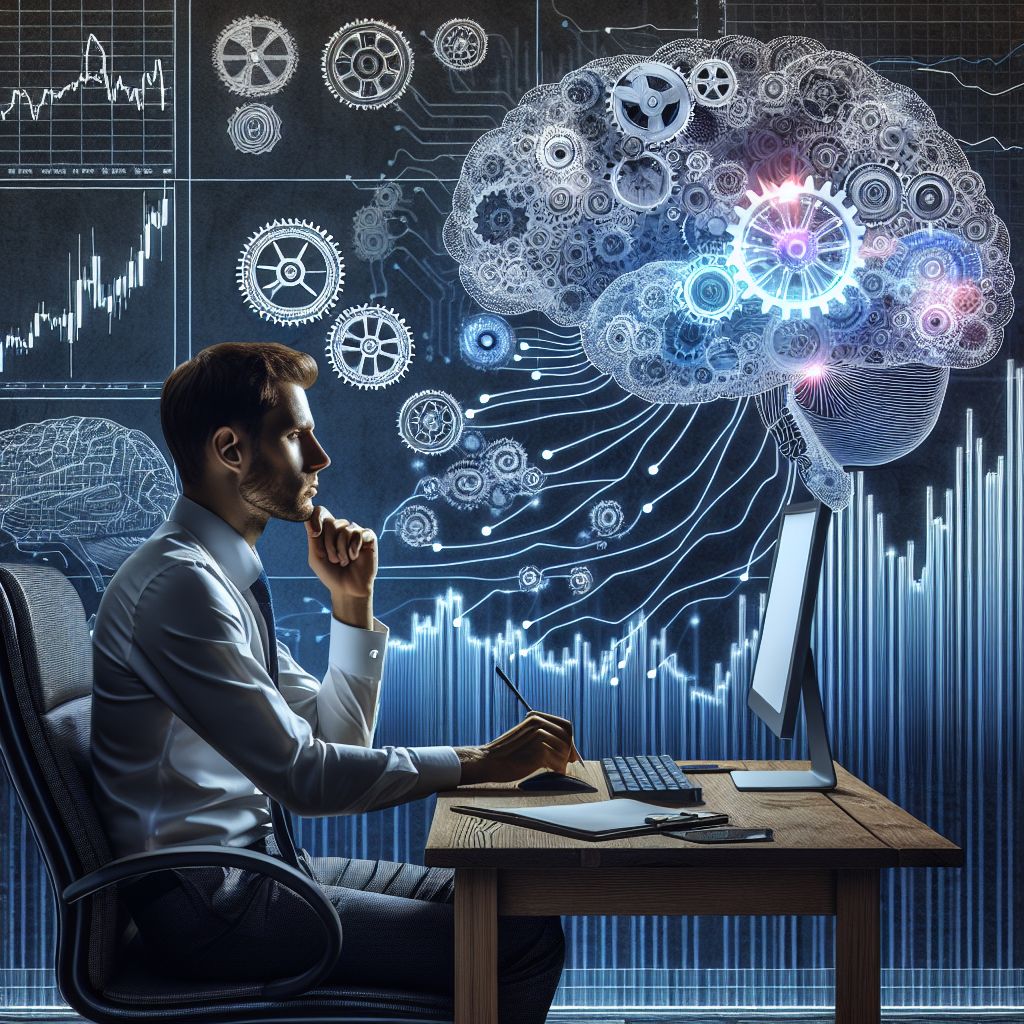
Even in the age of algorithmic trading, where Artificial Intelligence (AI) and machine learning algorithms are used to make trading decisions, the human element – psychology – still plays a crucial role. AI systems are designed by humans and are therefore susceptible to the same cognitive biases. Additionally, these systems are only as good as the data they are fed, and market data is inherently influenced by human psychology. Therefore, understanding the psychology behind trading is still crucial, even in an era dominated by AI.
Human psychology plays a significant role in trading, particularly in predicting market behavior and trends. Investors and traders are influenced by a variety of psychological factors such as fear, greed, and herd mentality. For instance, the fear of missing out (FOMO) can drive traders to buy into a rising trend, potentially inflating asset prices beyond their intrinsic value. Similarly, panic selling in response to negative news can cause markets to plummet, creating a self-fulfilling prophecy of decline.
Artificial Intelligence, despite its remarkable capabilities, is yet to effectively replicate the complexity and depth of human emotions and psychological biases. While it can process vast amounts of data at lightning speed and make rational decisions, it lacks the human touch – the ability to interpret subtle cues, understand cultural nuances, and react to unexpected events in a deeply human way. Hence, it is essential for traders and investors to incorporate psychological insights into their strategies, even as they leverage AI tools.
Moreover, AI algorithms can inadvertently contribute to market volatility. For example, high-frequency trading (HFT) algorithms, which execute trades within fractions of a second, can amplify market movements, leading to sudden spikes or crashes. Consequently, understanding how these algorithms work and their potential impact on market dynamics is crucial for both traders and regulators. This again underscores the importance of human oversight and intervention in an increasingly automated trading landscape.
In conclusion, while AI has significantly transformed the trading industry, human psychology remains an indispensable aspect of market dynamics. Therefore, a balanced approach that combines AI’s computational prowess with a deep understanding of human psychology can help traders navigate the volatile and complex world of financial markets. As the trading landscape continues to evolve, this blend of human intuition and AI-powered analytics is likely to become even more critical.